A decision changes. The analysis is in Google Docs, the meeting notes are in Drive, and Gemini can help find the explanation. You still need to establish which answer is approved, why the team chose it, and which commitments now need another look.
“We already have Google and its AI” is a reasonable objection to adding Traceway. Google can store decisions, help people understand them and support formal document approval. The question I would ask is how your team keeps those decisions connected to the work that depends on them.
What Google already covers
Google Drive has a genuine document approval process. On eligible editions, reviewers can approve or reject a file. Availability and participation depend on your edition and administrator settings.
The details matter. During review, you can require everyone to approve the same content, so edits reset approvals, or allow edits without that reset. A completed approval can lock the file, but editors can unlock it. Final approvals can remain associated with the earlier approved version; Google lets you view previous approvals. Check the settings your process actually uses.
Docs also has version history, including named versions and earlier changes, with edit permission required to browse that history. And shared drives keep files with the team when an individual leaves, subject to the relevant access controls.
Gemini adds useful help with the material. In Docs it can draft and refine text using source files. In Drive it can answer across selected sources and provide citations, with eligible plans required. Those citations give a reader somewhere to check the answer.
What happens when the reason changes?
Consider a fictional service company. It keeps spare parts in three regional depots because its repair promise depends on engineers getting parts quickly. Centralising the stock was considered and rejected: lower inventory costs did not justify slower repairs.
That decision is written in an operating-model document and formally approved. Six months later, demand shifts. Finance proposes a single warehouse, and Gemini helps recover the original analysis.
The next job belongs to the people responsible for the decision. Is the repair promise still achievable? Does the replenishment plan need changing? What happens to the depot staffing commitments? Who has authority to accept a different balance between cost and repair time?
A well-maintained Google process can keep those relationships in documents, registers and configured workflows. The test is whether someone joining later can follow them reliably, including the rejected option and the reason it has become relevant again. Approving the revised operating-model document answers one part of that problem. The dependent commitments still need their owners' review.
Where Traceway fits
I built Traceway around that shared decision record. Its decision workflow keeps the call, rationale, alternatives and assigned roles together with human approval and versioned history. The decision can connect to the strategy it serves and the work it creates, so the next review has relationships to follow.
Traceway also has native AI and a conversational drafting experience. People can work through a question with Trace, review the proposed record and write directly when they prefer. Approval remains a separate human act. The useful comparison is how the whole process works, including who confirms the reasoning and what the organisation keeps afterwards.
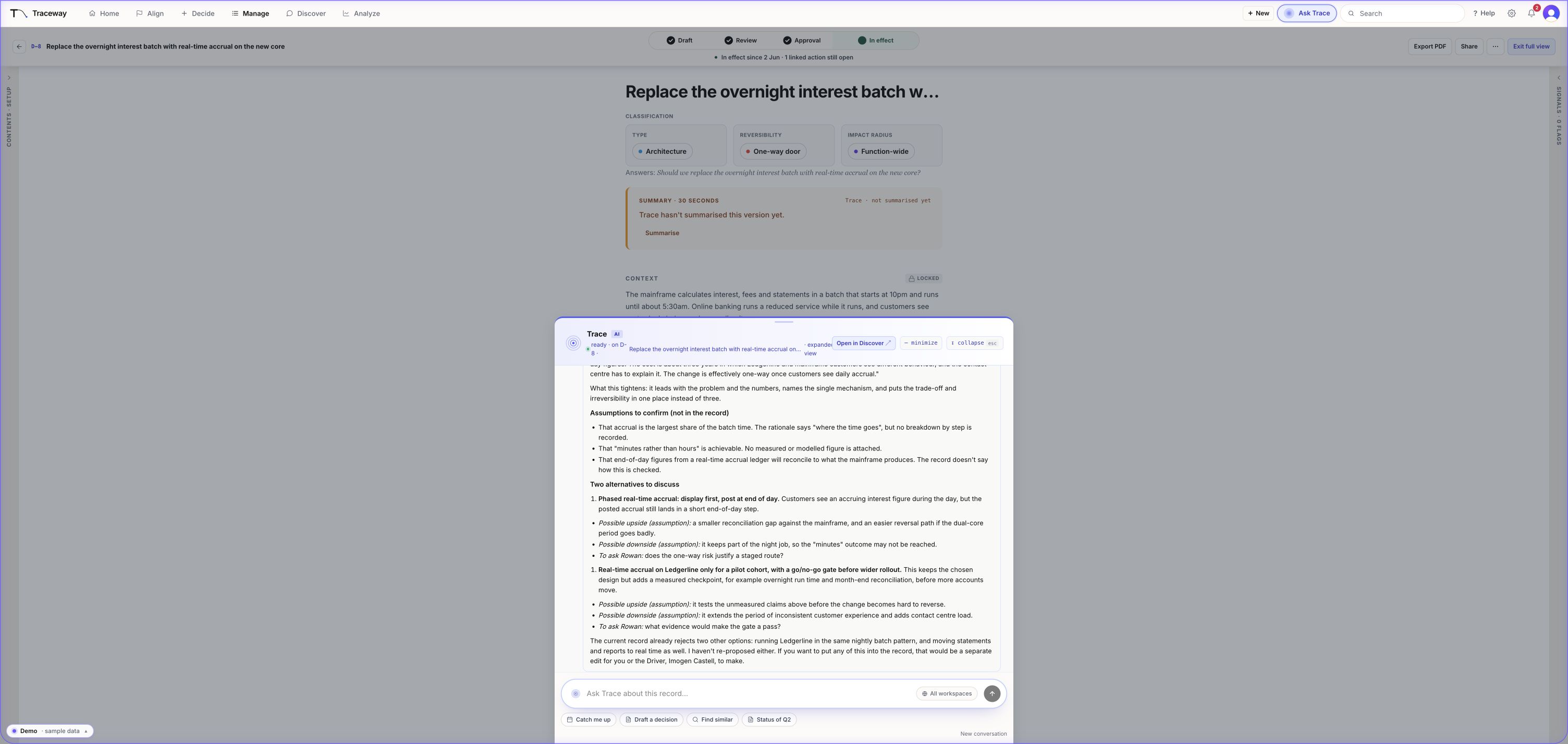
For the depot example, the record would preserve why regional stock was chosen and which alternative was rejected. Links to the repair objective and delivery work would give the responsible people a starting point when consolidation returns for consideration. They must still check the evidence and agree what changes. An impact preview does not approve a replacement or update every task.
Traceway's tracker connection creates work in Jira, then becomes read-only. Delivery owners retain responsibility for subsequent tracker changes.
Bring a decision with that kind of dependency to a Traceway demo. Follow the reasoning through human approval, then change an assumption and identify the commitments to revisit. That is the case Traceway needs to prove to a team that already has Google.